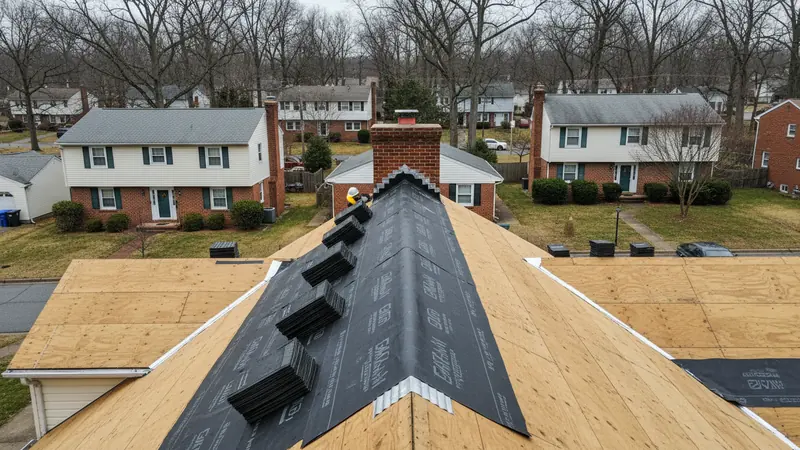
Find where water gets in. Know whether you're paying for a temporary patch or a lasting repair. Check that the quote covers the wet materials left behind.
Stop further damage while you arrange the repair
If rain is entering your home, separate the immediate work from the permanent repair. A tarp may protect the damaged area while a roofer investigates. Ask for an emergency invoice that says what was covered. It should also say what still needs work. Ask whether the permanent quote includes removing the temporary cover.
Maryland Insurance Administration guidance says you should take reasonable steps to prevent further storm damage. You need not wait for the adjuster. Its examples include having a damaged roof tarped. Dry belongings where possible, too. Do not put yourself in danger. Photograph damage before, during and after temporary repairs. Keep receipts.
Insurance will only reimburse you for a cause of damage your policy covers. The work must be reasonable and necessary. Your policy's deductible also affects reimbursement. Hiring someone to stop the rain does not mean insurance will pay. Keep a clear description of the emergency work. That lets you discuss it separately from the permanent repair or work inside the house.
Source: Maryland Insurance Administration, Storm Related Damage FAQs, undated guidance; no effective date displayed. Gathered 2026-09-23.
Ask the roofer to trace the water before quoting a patch
Ask the roofer where water gets in. Ask what evidence supports that answer. Show them photographs of the stain. Describe when it appears. Point out previous patches. Ask for photographs showing why the damage calls for the proposed repair. Ask them to note any areas they could not inspect.
The National Park Service's guidance for historic roofs highlights places to check closely. These include roof intersections, dormers, old patches and the supporting wood. Water can enter through roofing or flashing. Moisture can also condense underneath. Those are different problems. Ask the contractor to say in the quote which problem they found.
Ask what must be lifted to reach the part that failed. Ask what can be reused. Replacing flashing on a slate roof, for example, can mean lifting nearby slates that are still sound. A small visible defect does not tell you how much roof needs opening up. A ceiling stain alone does not mean the entire roof needs replacing.
Source: U.S. Department of the Interior, National Park Service, Preservation Brief 4: Roofing for Historic Buildings, published February 1978; technical guidance, not a county code or price schedule. Gathered 2026-09-23.
For an Ellicott City historic roof, define what the patch changes
Historic review is separate from the building-permit question, as the county roof-repair page explains. For a leak repair in the Ellicott City Historic District, ask exactly what the roofer will remove. Ask what will take its place.
The district guidelines treat small roof repairs with similar materials as routine maintenance. That means similar dimensions, shape, colour and texture. Ask for those details in the estimate. An unspecified “matching patch” tells you too little. If the fix changes the material or visible detail, settle whether it needs historic review before ordering it.
For slate, ask whether the stone or the metal flashing has failed. National Park Service guidance explains that metal flashing can wear out while slate remains sound. It also warns that incompatible metals can corrode when used together. Ask which metal the roofer will use. Check how it fits the existing roof and drainage system.
These answers let you judge a local repair. You can see what failed. You know what stays. You can check how the new work joins it. They also help you spot plans to replace sound material just to reach a leak.
Source: Howard County Historic District Commission, Ellicott City Historic District Design Guidelines, adopted 1998-05-07; National Park Service, Preservation Brief 29: The Repair, Replacement, and Maintenance of Historic Slate Roofs, published spring 1993, technical guidance with no separate effective date. Gathered 2026-09-23.
Include the wet materials inside the house
Stopping the leak is one part of the job. Dealing with the damage is another. Howard County's Health Department lists roof leaks, plumbing leaks and condensation as possible sources of indoor moisture. Its guidance starts with finding the source. You then need to fix it. It says to replace mouldy porous materials such as wallboard, ceiling tiles and carpet.
Ask whether the roofer's price covers only the exterior. If someone else will dry the space or repair the ceiling, name their responsibility in the work plan. “Repair the leak” leaves too much open if you expect it to cover damaged insulation, wallboard or paint. Before anyone closes the ceiling, ask how the contractor will check that the area is dry. Ask whether more damaged material remains hidden.
The Health Department says mould and mouldy odours seldom need testing. It has no programme to assess mould concerns or help address them. Do not assume a county mould visit will be the next step in your repair.
Source: Howard County Health Department, Mold, undated homeowner guidance; no effective date displayed. Gathered 2026-09-23.
Compare the work included, because no local price is established
We could not find a Howard County primary-source price for residential roof leak repair, a diagnostic visit or emergency tarping. County permit fees do not tell you what a roofer should charge.
Maryland requires your written home-improvement contract to describe the work and materials. For this job, ask the contractor to spell out:
- What the visit costs if the roofer cannot locate the leak.
- Whether the price covers a temporary seal or a permanent repair of the part that failed.
- Which roofing, flashing and supporting wood they will remove. What they will replace.
- How you will approve work on hidden damage they uncover. How you will pay for it.
- Who returns if water appears again. What the written warranty covers.
Use these questions to compare bids. They are not extra county contract requirements. Ask for separate prices where the quotes cover different work. A cheaper patch differs from a repair that opens the roof to replace damaged wood. You cannot compare those by total alone. Keep the agreed photographs and work description with your signed contract.
Source: Maryland Department of Labor, Maryland Home Improvement Commission, Maryland Home Improvement Contracts, undated guidance; no effective date displayed. County-specific service prices were not established from the primary sources reviewed. Gathered 2026-09-23.
Separate the repair decision from the insurance decision
Noticing a leak after a storm does not prove you have storm damage that insurance covers. Maryland Insurance Administration guidance explains that existing wear or deterioration can affect whether a roof claim is paid. If only part of your roof is damaged, the policy may cover only that part. Whether new materials must match also depends on your policy.
Ask the contractor to describe the physical damage. Ask them to set out the proposed repair. Do not assume a claim will pay for a whole new roof. Compare the proposed work with the insurer's explanation. If they differ, pin down which work is disputed. It might be failed flashing, damaged covering, supporting wood or interior damage. That gives you something concrete to discuss.
The state warns about unsolicited “free roof” offers. Calling maintenance storm damage does not make it covered. Before signing, check what you owe if the insurer pays less than the contractor expects. Your repair contract should make sense even while the claim remains undecided.
Source: Maryland Insurance Administration, Automobile and Homeowners Post-Disaster Claim FAQs and Consumer Advisory: Watch Out for “Free Roof” Offers, undated guidance; no effective dates displayed. Gathered 2026-09-23.